🎉 LIMITED TIME: FREE SITE VISIT ON SELECTED PROJECTS

Legal Checks Before Buying Open Plots in Telangana
A practical checklist of documents and verifications every buyer must complete before purchasing open plots or land in Telangana.
2/1/20262 min read
By Sawera Townships • Updated 2025 • 4–5 min read
Legal Checks Before Buying Open Plots in Telangana (2025 Guide)
Buying an open plot in Telangana can be a strong long-term investment — but only if the land is legally clear. Many buyers lose money not because the location is bad, but because the documentation and approvals were not verified properly. This guide explains the most important legal checks you must complete before purchasing any open plot or land.
Why Legal Verification Matters Before Investing
Open plots may look attractive on-site, but the real safety lies in the paperwork. Legal verification helps you avoid:
Disputed or court-case land
Fake or incomplete approvals
Resale problems in the future
Construction restrictions
Unexpected government or layout issues
A clean legal file is more valuable than a cheap price.
The first step is confirming that the seller is the true legal owner.
What to check:
Sale deed is in the seller’s name
Ownership history is clear
No multiple claimants on the same land
Always ask for original documents, not just photocopies.
Introduction
1. Verify the Title and Ownership
2. Check the Encumbrance Certificate (EC)
An Encumbrance Certificate shows whether the land has any loans, mortgages, or legal liabilities.
Why it matters:
Confirms the plot is free from financial disputes
Protects you from hidden claims
Recommended EC period: minimum last 10–15 years
3. Confirm Layout Approval Type (HMDA vs GP)
HMDA Approved Layouts
Higher legal clarity
Better resale demand
More structured development rules
GP Approved Layouts
Lower entry cost
Construction permissions may be limited
Best suited for long-term holding
Approval type should match your investment goal.
4. Verify Land Use and Zoning Status
Not all land can legally be used for plotting or construction.
Check whether the land is:
Residential zone
Agricultural zone
Industrial or restricted zone
Land use impacts both legality and future resale.
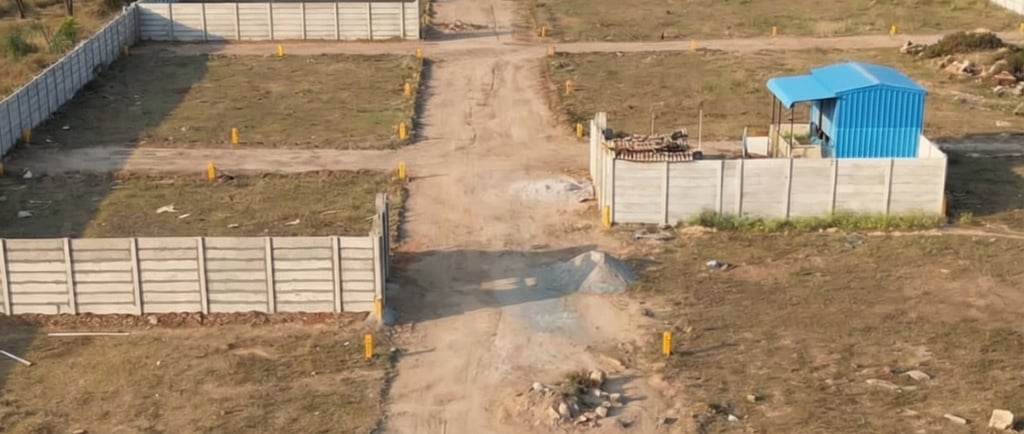
5. Ensure Proper Road Access and Boundary Demarcation
A plot without clear access roads or boundaries becomes difficult to use or resell.
Confirm:
The plot has an approved approach road
Boundaries are marked clearly
Layout matches official plan
Avoid plots with “future road promise” only.
6. Confirm Mutation and Revenue Records
Revenue documents confirm that land records are updated in government systems.
Key documents include:
Pattadar passbook (where applicable)
Mutation certificate
Adangal / Pahani records
These ensure the land is officially recognised.
7. Check for Litigation or Government Notices
Even if documents look fine, land may still be under dispute.
Always verify:
Court case history
Government acquisition notices
Local objections or claims
A legal opinion from a qualified advocate is strongly recommended.
Need help verifying approvals and documents? Talk to our expert before you invest.